Astronomers discover second-generation planet formed by dying star
Astronomers found evidence of a second-generation planet forming around the white dwarf HS 0209+0832 from material ejected by the dying star.
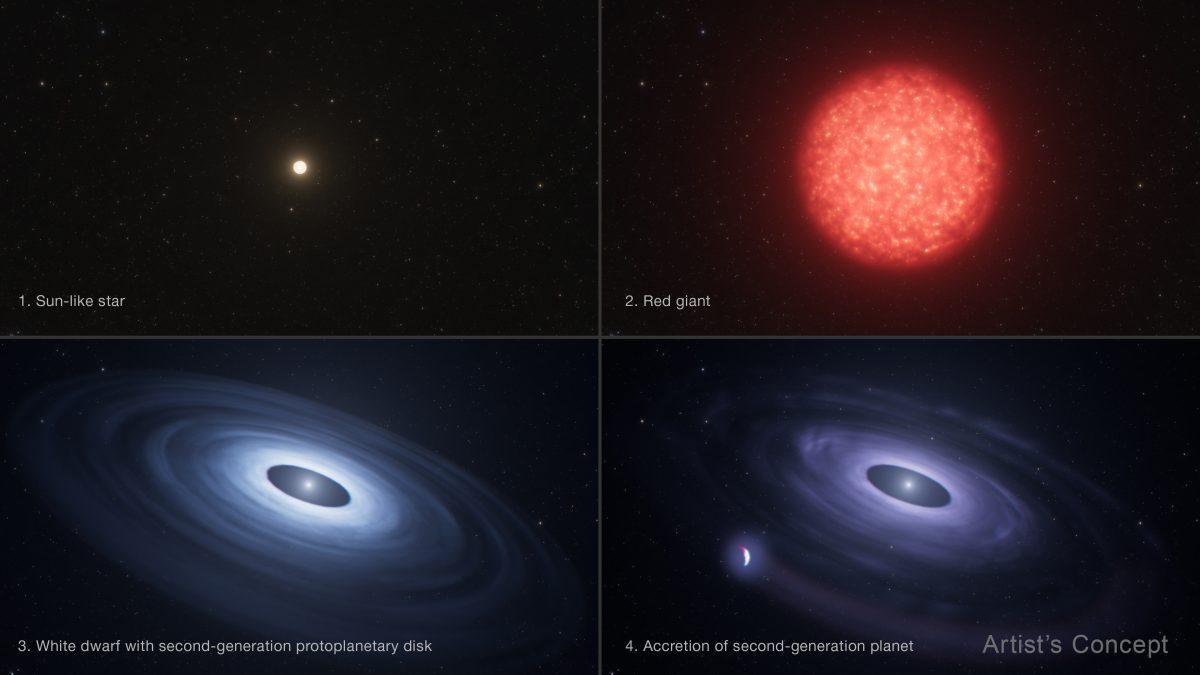
Astronomers found evidence of a second-generation planet around a white dwarf star, according to a Nature Astronomy study. The finding shows worlds can form from materials ejected by a dying star. The core remnant star studied by the team is HS 0209+0832.
That star was once a low-mass star. It burned through its nuclear fuel. Researchers found chemical signatures indicating a new planet formed from cast-off remnants of that dead star.
Most known planets are first-generation planets. Those include worlds in our solar system. They form from leftover material present when a star is born.
The team analyzed data from the Hubble Telescope, operated by NASA. Hubble recorded roughly 100 unidentified chemical features during an initial 1999 observation of the star.
Those chemicals likely came from material ejected when the star died, researchers said. The discovered elements only form under the conditions of a dying star, researchers noted. Astronomers theorize the ejected materials coalesced into a giant gas planet.
The planet is estimated to be about the size of Jupiter. It is rapidly losing atmosphere. Astronomers still believe it will likely survive as the white dwarf cools.
NASA reported the planet could remain in a stable habitable zone for millions of years. That period would begin once the white dwarf maintains a consistent temperature.
A white dwarf is the dense stellar core left behind after a star exhausts its fuel. Observatories track these stellar remnants to study the life cycles of celestial bodies.
Astronomers continue to evaluate the data gathered from the telescope.