US Army showcases quieter Rio Grande border in Roma Texas
In Roma, Texas, a Rio Grande Valley troop surge shifted hundreds of U.S. soldiers to the river border following reported signs of cartel activity.
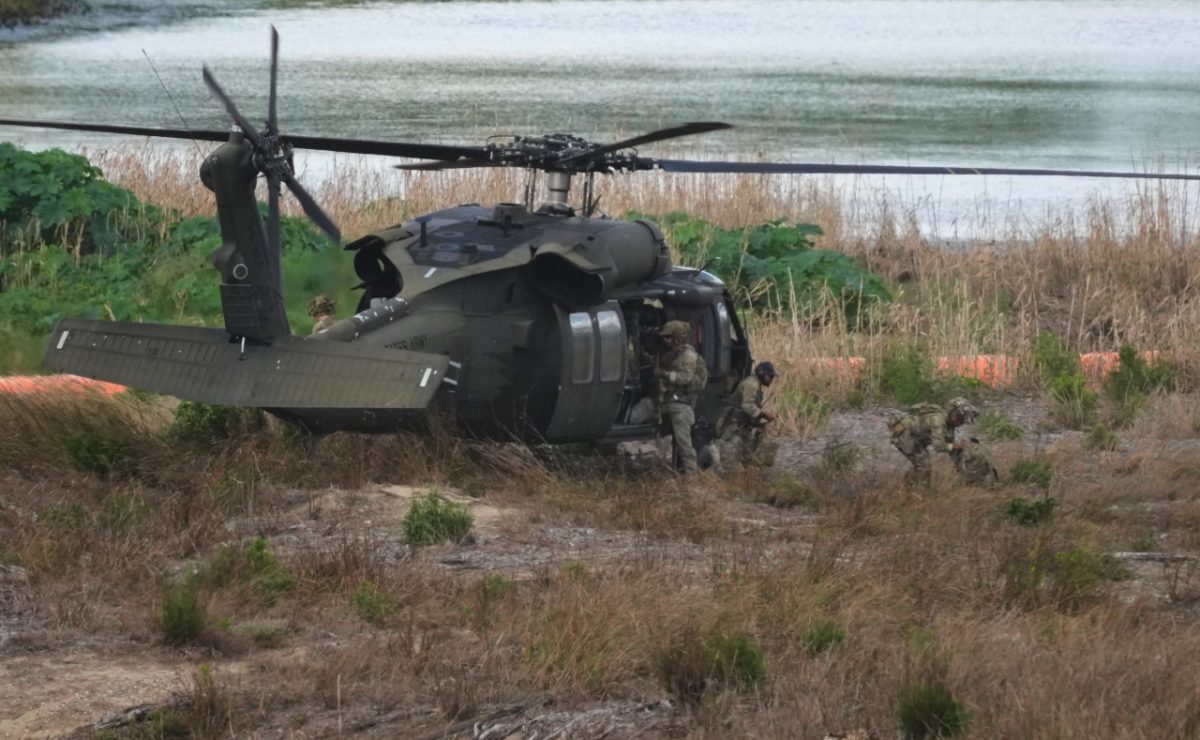
Army Lt. Col. Ray Richards pointed to a quiet stretch of river in Roma during an active military deployment. The movement shifts hundreds of service members into the region following signs of cartel activity. American soldiers gathered at a monitoring post in the border city. An infantry vehicle sat between residential houses. A Blackhawk helicopter dropped troops onto a river island.
U.S. Border Patrol agents moved along the river in fan-propelled boats. Richards noted past crossings at the location.
“At any given time, there would be multiple rafts full of people trying to get to this side,” Richards said.
The military moved hundreds more soldiers into the region this month. The repositioning shifts troops already deployed along the 2,000-mile southern border. Federal officials stated the mission follows signs of elevated drug cartel activity. It also involves cooperation from the Mexican military.
Crossings fell after President Joe Biden introduced asylum restrictions in 2024. Numbers fell again when President Donald Trump suspended asylum at the border. Trump faces headwinds from high prices, an Iran conflict and low popularity. Border security remains a bright spot in his polling numbers.
Some outside experts questioned the troop presence along the river. David Shirk, a University of San Diego political science professor, said the administration wants to show aggressive enforcement.
“I don’t dispute there’s some benefit to having personnel in areas at risk for people smuggling and drug trafficking,” Shirk said. “But the vast majority of that is now happening at ports of entry.”
Seizures show most fentanyl, cocaine and heroin arrive through official checkpoints. Dessa Bergen-Cico, a public health professor at Syracuse University, studied the issue. She said low street prices for cocaine and fentanyl suggest drug flows remain unimpeded.
Military leaders defended the river operation. Army Maj. Gen. Curtis Taylor commands the southern border task force. He called the mission vital for targeting human trafficking.
Taylor called the moral argument “dismantling this marketplace of human trafficking that is bringing people into the border.”
“An added benefit of that is there’s an awful lot of drugs moving with that human trafficking,” Taylor said.
Troops guard riverside terrain
Roma has roughly 10,000 residents and lacks a border wall in several steep spots. Miguel Alemán sits directly across the water in Tamaulipas, Mexico. The river gap spans a football field or less between the towns. Roma previously saw heavy crossing numbers during 2021.
The Army commands about 8,000 troops along the entire southwest border. Texas law enforcement and the U.S. Coast Guard also added personnel to the area. Obstacles in Roma include a line of buoys the size of hay bales. Concertina wire lines the riverbank. A blimp watches overhead.
Army Sgt. Nathaniel Decker said he saw people on three rafts cross at dusk. One group cleared the buoys. Decker notified Border Patrol. Agents caught the group near a home in Roma.
The military works to disrupt drones flown by Mexican cartels. Troops use electronic jamming, capture nets and laser systems. Some drones still cross.
“We have reduced a lot of the flights,” Richards said. “But in the middle of the night, those drones can fly into the U.S. airspace, and that’s a true threat to any soldier on the ground.”
Forces boost river security
Mexican President Claudia Sheinbaum increased anti-crime operations under pressure from Trump. Mexico deployed 500 National Guard and military officers to Tamaulipas this month. A Mexican federal official said the deployment relies on intelligence tracking criminal groups. The Mexican Army is using two UH-60 helicopters, drones and anti-drone gear.
The U.S. Coast Guard added over 300 members in October of last year. Members encountered gunfire from the Mexican bank near Garceno last month. Coast Guard personnel returned fire. No members suffered injuries.
Coast Guard Cmdr. Jeff Miller declined to share further details about the gun battle. Miller said personnel work in a challenging setting and carry authority to defend themselves.
A recent river patrol showed quiet conditions. A Coast Guard boat mounted with machine guns moved past two men fishing. Steel walls stood on the American side. Mexico showed a park, soccer goals and houses.
An unnamed boat driver said Mexican children sometimes wave like a fire truck is passing. Others offer beer or make offensive gestures. Joel Garcia acts as deputy chief patrol agent for the Rio Grande Valley. Garcia said seizures, apprehension numbers and lower traffic show operations work.
“Border security, when done right, if we have truly secured the line, should be boring,” Garcia said. “It should look as if no one is crossing and nothing is happening.”
The Border Patrol operates as the primary federal agency responsible for securing international land boundaries. Military units provide direct logistical, surveillance and engineering support to civilian law enforcement agents. Border operations often combine local, state and federal resources across river corridors.
Troops continue daily operations along the river bluffs in Roma.